.png)
Dealership vs Private Seller Car Buying in Monroe, NC
Compare the safety of buying a car from a dealership vs a private seller in Monroe, NC — warranties, title fraud, lemon law, and consumer protections explained.
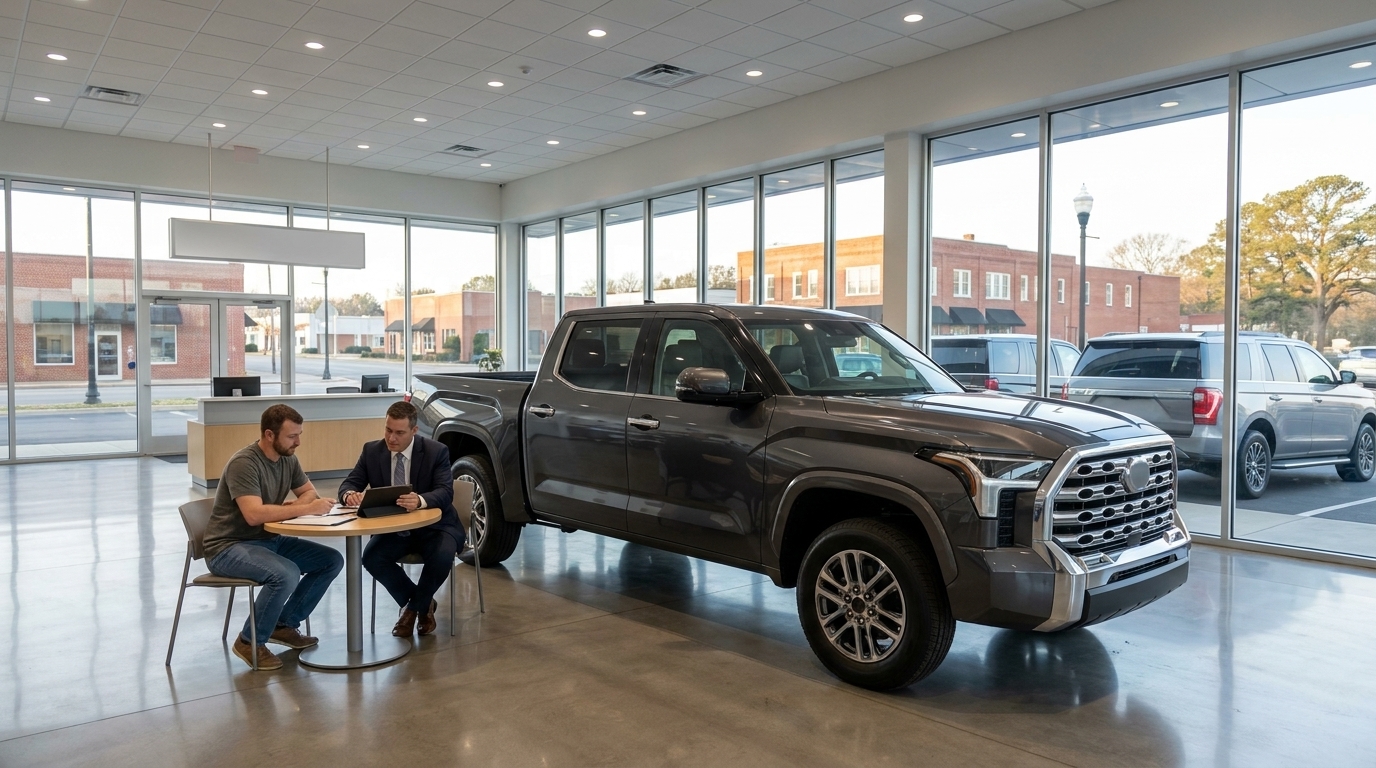
For most Monroe, NC buyers, purchasing a used vehicle from a licensed dealership is meaningfully safer than buying from a private seller. Dealers are bound by North Carolina's Unfair and Deceptive Trade Practices Act (Chapter 75), which prohibits misrepresenting vehicle history, odometer readings, warranty coverage, and salvage status. Private sales, by contrast, leave the buyer largely on their own — with no lemon-law remedy and only general contract or fraud law as recourse.
That doesn't mean every dealership experience is identical or every private sale is a scam. But the legal, financial, and title-transfer guardrails around the two transactions are fundamentally different, and understanding those differences is how you avoid the used-car horror stories that surface every year in Union County.
What legal protections do you get at a dealership vs a private seller in North Carolina?
At a North Carolina dealership, you are protected by Chapter 75, which lets the state Attorney General pursue injunctive relief, civil penalties, and consumer restitution — and lets private buyers sue for treble damages and attorneys' fees. Private sellers face no such statute. Your only remedy in a private sale is general contract or fraud law, which is slower, harder to prove, and rarely worth pursuing on a five-figure car.
This is the single biggest safety gap between the two paths. When a dealer like Griffin Buick GMC in Monroe, NC represents that a vehicle has a clean title, an accurate odometer, and no undisclosed flood or salvage history, that representation is legally enforceable under Chapter 75. When a private seller on a classified site makes the same claim, you're relying on their honesty and your ability to prove otherwise later in civil court.
Does North Carolina's lemon law cover used cars from either seller?
No. North Carolina's lemon law — the New Motor Vehicles Warranties Act at N.C. Gen. Stat. §§ 20-351 through 20-351.10 — applies only to new motor vehicles sold or leased with a manufacturer's express warranty. It does not cover standard used-vehicle purchases, whether from a dealer or a private party. This is one of the most misunderstood facts in the North Carolina car market.
There is a narrow exception. A vehicle that still qualifies as a "new motor vehicle" under § 20-351 — for example, a demonstrator or a vehicle sold for the first time at retail while still under the manufacturer's new-vehicle warranty — may be covered even if you're not technically the first owner. But a five-year-old truck with 60,000 miles is not getting lemon-law protection in North Carolina from anyone. What used-car buyers actually rely on for protection is Chapter 75 (at a dealer) and, at franchise stores, remaining factory warranty coverage or a certified pre-owned program.
How does title transfer risk differ between dealer and private sales?
At a dealership, title work is handled for you: the store submits the MVR-1 Title Application to NCDMV, confirms liens are released, collects the Highway Use Tax and title fees, and delivers a clean chain of title. In a private sale, that entire process is yours to manage — and any mistake becomes your problem, not the seller's.
North Carolina requires both parties to complete the assignment on the back of the original certificate of title. The buyer must then submit the MVR-1 to NCDMV with proof of active North Carolina liability insurance and valid photo ID. Any existing lien must be satisfied and released before NCDMV will process the transfer. Online title transfers are generally not available to private parties — you'll be at a license plate agency in person or handling it by mail.
The risks in a private title transfer are concrete: undisclosed liens the seller "forgot" about, a title the seller doesn't actually hold (they were still making payments), a bonded-title situation the buyer didn't realize they were inheriting, or an odometer discrepancy that only surfaces at the license plate agency. A dealership absorbs these problems before you sign.
What does a side-by-side safety comparison look like?
The table below summarizes the key safety and consumer-protection differences for used-car buyers in Monroe, NC. This is the framework we'd walk any first-time buyer through at Griffin Buick GMC before they compare a dealer vehicle to a Craigslist listing.
| Protection or Risk | Licensed NC Dealership | Private Seller |
|---|---|---|
| Chapter 75 (Unfair & Deceptive Trade Practices) | Applies — treble damages possible | Does not apply |
| NC Lemon Law (§§ 20-351 to 20-351.10) | Only for qualifying new vehicles | Does not apply |
| Odometer & history misrepresentation liability | Statutory, enforceable | Fraud claim only — must prove intent |
| Title transfer handled for buyer | Yes — MVR-1 filed by dealer | No — buyer files at license plate agency |
| Lien payoff verification | Handled before delivery | Buyer's responsibility |
| Highway Use Tax collection | Collected at purchase | Paid by buyer at NCDMV |
| Financing on-site | Typically available | Buyer arranges independently |
| Recourse if vehicle is misrepresented | Chapter 75, AG's office, private suit | General contract/fraud litigation |
When can a private sale actually be the right call?
A private sale can make sense when you know the seller personally, the vehicle has verifiable service records, and the price advantage is large enough to offset the loss of dealer protections. Family transfers, coworker sales, and long-time neighbor deals often fit this pattern — and in Monroe, NC, plenty of them happen every week without incident.
Even in those cases, remember that "as is" language on a private bill of sale primarily limits implied warranties. It does not shield a seller from liability for intentional misrepresentation or fraudulent concealment of known defects. If a private seller knowingly hides a blown head gasket or a rebuilt-title history, "as is" is not a legal force field. It just means you'll spend money and time proving what they knew and when they knew it.
How should a Monroe, NC buyer weigh the tradeoff?
Weigh the price gap against the value of the protections you're giving up. A $2,000 discount on a $25,000 truck sounds attractive until you factor in a potential undisclosed lien, a failed emissions inspection under NCDMV's bonded-title process, or a fraud claim you have to litigate yourself. For most buyers — especially first-time buyers, buyers financing the purchase, and buyers who don't want to spend a Saturday at a license plate agency — a licensed dealer is the safer default.
Monroe sits in a competitive Charlotte-region used market, with Union County buyers routinely cross-shopping stores from downtown Monroe out toward Indian Trail and Waxhaw. Griffin Buick GMC's local track record reflects what customers in this area consistently look for: clear communication, honest trade valuations, and staff who handle the paperwork correctly the first time — which, in a transaction with this much paperwork exposure, matters more than most first-time buyers realize.
Frequently asked questions
Is buying from a dealership always safer than a private seller in North Carolina?
In most cases, yes. Licensed North Carolina dealerships are bound by Chapter 75's Unfair and Deceptive Trade Practices Act, which prohibits misrepresenting vehicle history, odometer readings, and warranty coverage — and allows treble damages plus attorneys' fees. Private sellers face no equivalent statute. The main exception is a well-documented sale between people who know each other, though even then "as is" does not defeat a fraud claim.
Does North Carolina's lemon law protect used car buyers?
No. The New Motor Vehicles Warranties Act at N.C. Gen. Stat. §§ 20-351 through 20-351.10 applies only to new vehicles sold with a manufacturer's express warranty. Standard used-vehicle purchases — whether from a dealer or a private party — are not covered. Used-car buyers rely instead on Chapter 75 protections against dealer deception and on any remaining manufacturer or certified pre-owned warranty coverage.
Who is responsible for the title transfer in a private sale in Monroe, NC?
The buyer. In a private North Carolina sale, both parties complete the assignment on the back of the original title, and the buyer then submits a completed MVR-1 Title Application to NCDMV along with proof of active North Carolina liability insurance and valid photo ID. Any existing liens must be released first. Online title transfers are generally not available to private parties — expect an in-person visit to a license plate agency.
What taxes and fees apply when I title a used vehicle in North Carolina?
Buyers must pay the Highway Use Tax and applicable title fees when applying for a new certificate of title. Exact amounts are set by Chapter 20 and current NCDMV fee schedules, and non-official summaries commonly cite a 3% Highway Use Tax on the purchase price. Verify the current amount with NCDMV before budgeting, since fees and thresholds can change with legislation.
What if the seller can't produce the title?
Under N.C. Gen. Stat. § 20-68, a duplicate title may be applied for by the first lienholder, owner, or legal representative of the owner, and NCDMV must observe a 15-day waiting period before issuing it. If there's no clear title at all, NCDMV's bonded-title procedure requires a vehicle appraisal, an indemnity bond in the required amount, an emissions inspection where applicable, and payment of relevant taxes and fees. This is often a signal to walk away from a private deal.
Does "as is" language in a private sale block all legal claims?
No. "As is" language primarily limits implied warranties. It does not bar claims for intentional misrepresentation or fraudulent concealment of known defects. If a private seller knowingly hides flood damage, a rebuilt title, or a rolled-back odometer, an "as is" clause on the bill of sale does not eliminate their fraud exposure — but proving what the seller knew is the buyer's burden, which is exactly why the dealer path is usually safer.
How can I verify a dealership handles paperwork correctly?
Look for a long local track record, transparent pricing, clear disclosure of any prior use or history, and reviews that specifically mention the finance and title process rather than only the sales experience. A dealership's long local track record and consistent reviews are the kind of signals that indicate repeatable back-office work — not just occasional standout sales.
The bottom line for Monroe, NC used-car buyers
The safety calculus between a dealership and a private seller in North Carolina isn't close on paper. Chapter 75 protections, dealer-handled MVR-1 filings, lien verification, and Highway Use Tax collection all shift risk off the buyer and onto the dealer. Private sales can still be the right call in the right circumstances — but they require the buyer to serve as their own compliance department, their own title clerk, and their own fraud investigator.
Readers in Monroe, NC who want a used-vehicle purchase handled with the paperwork, title work, and consumer-protection framework built in can reach Griffin Buick GMC at https://www.griffinmonroe.com/ to see current inventory and start the conversation.