.png)
Leasing vs Buying a Car: Complete Comparison Guide for Smart Buyers in Monroe, NC
Choosing between leasing and buying a car in Monroe, NC? Compare costs, flexibility, mileage, and tax rules to make the right auto lease or buy decision.
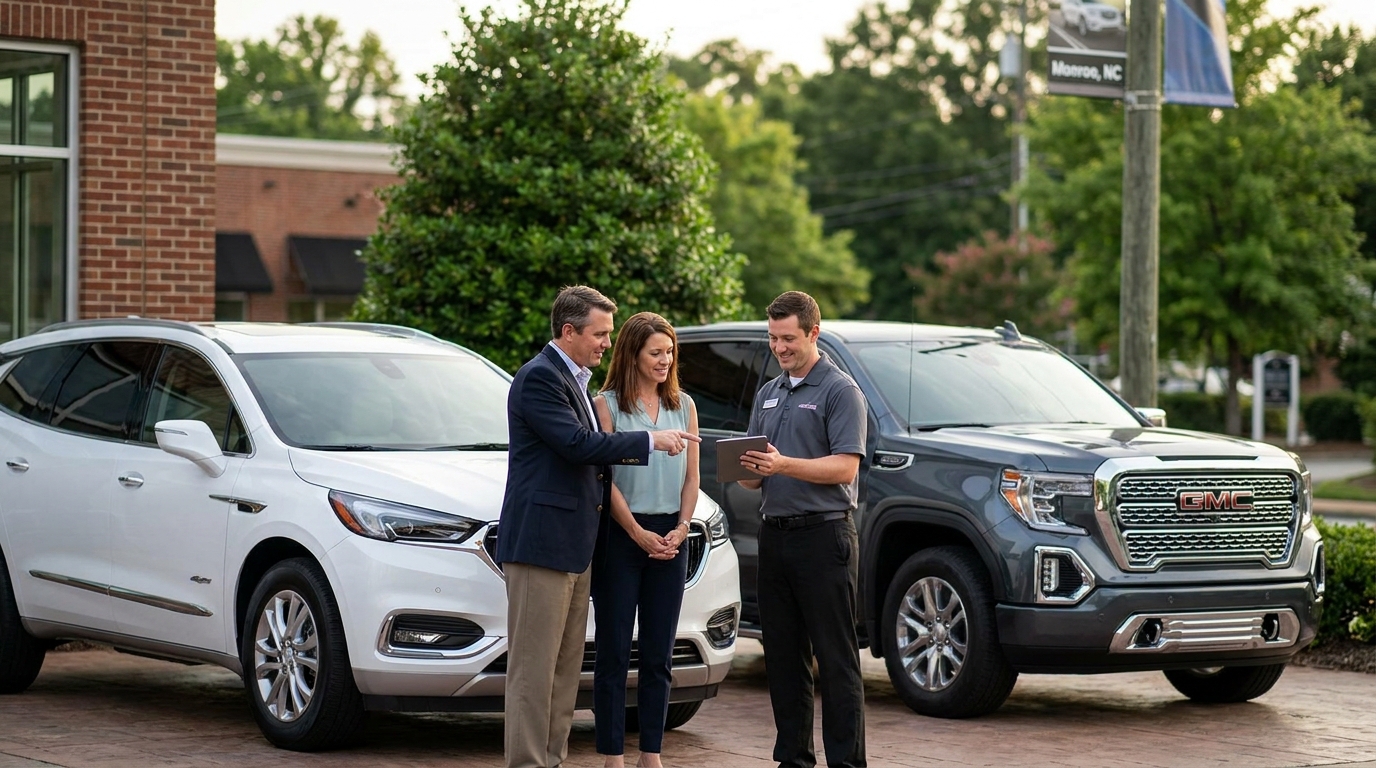
Standing in a dealership showroom looking at a new Buick Encore GX or GMC Sierra 1500, you're probably weighing the same question thousands of Union County drivers face every year: should you lease or buy? It's one of the most consequential financial decisions in the car-shopping process, and the right answer depends less on what's popular and more on how you actually drive, how long you keep vehicles, and what you want your monthly budget to look like.
This guide walks through the real tradeoffs of the lease vs buy car decision, with specific attention to what matters for drivers in Monroe, NC — from North Carolina's tax treatment of vehicles to the commuting realities of US-74 and the daily run into Charlotte.
The Core Difference Between Leasing and Buying
When you buy a car — whether with cash or through financing — you own the vehicle outright (once the loan is paid). You can drive it as many miles as you want, modify it, sell it whenever, and keep it for as long as it runs.
When you lease, you're essentially renting the vehicle for a set term, typically 24 to 39 months. You pay for the depreciation that occurs during your lease term, plus rent charges and fees. At the end, you return the car or buy it out at a predetermined residual value.
That single distinction — ownership vs. temporary use — cascades into every other difference in cost, flexibility, and long-term value.
Cost Comparison: Lease vs Buy
Monthly Payments
Lease payments are almost always lower than loan payments on the same vehicle. That's because you're only financing the portion of the car's value you'll "use up" during the lease term, not the entire purchase price. For a driver eyeing a new GMC Terrain, the difference can easily run several hundred dollars a month.
That said, lower monthly doesn't mean lower lifetime cost. If you lease continuously for ten years, you'll likely spend more than if you had bought a car and kept it for that same decade.
Upfront Costs
Leases typically require a smaller down payment (sometimes called a "cap cost reduction"), plus first month's payment, an acquisition fee, and security deposit if required. Buying usually requires a larger down payment to keep monthly payments manageable and avoid being underwater on the loan.
Long-Term Value
When you finish paying off a purchased vehicle, you own an asset. A well-maintained Buick Enclave or GMC Yukon can give you years of payment-free driving after the loan ends — that's where buyers recoup the higher monthly cost. Leases leave you with nothing at the end except the option to start a new lease or buy out the vehicle.
North Carolina Tax Considerations for Monroe, NC Buyers
North Carolina handles vehicle taxes differently than many states, and it matters for your auto lease or buy decision. Instead of a traditional sales tax on vehicles, North Carolina charges a Highway Use Tax of 3% on the purchase price when you buy a vehicle and title it through the NCDMV. For leases, the Highway Use Tax is generally applied to the sum of the lease payments rather than the full vehicle value, which can shift the math slightly in favor of leasing for higher-priced vehicles.
Union County also assesses an annual vehicle property tax based on the assessed value of the car you own or lease — this is collected alongside your registration renewal through the state's Tag & Tax Together program. Whether you lease or buy, you're paying this annually as long as the car is registered to a Monroe address. Because the property tax is based on assessed value, newer leased vehicles that you swap every three years will keep you in a higher tax bracket compared to a paid-off vehicle you've owned for seven or eight years.
When Leasing Makes Sense
Leasing fits certain drivers and lifestyles better than others. Consider leasing if:
- You like driving a new car every few years. Lease terms align well with manufacturer warranty coverage, so you're essentially always in a vehicle covered for major repairs.
- Your annual mileage is predictable and moderate. Most leases include 10,000–15,000 miles per year. If you live in Monroe and your commute is mostly local — around downtown, to Wingate University, or short hops to Indian Trail — that allowance usually fits comfortably.
- You want lower monthly payments and don't want to deal with selling a car later. At lease-end, you just hand the keys back.
- You use the vehicle for business. Lease payments can sometimes be partially deductible if the vehicle is used for qualified business purposes (consult your tax advisor for specifics).
- You want access to features like advanced driver-assist tech. Newer GMC and Buick models include the latest safety and infotainment systems, and leasing keeps you in current-generation technology.
When Buying Makes Sense
Buying is generally the smarter long-term financial move for drivers who:
- Drive a lot of miles. If you commute daily into Charlotte on US-74 or routinely make trips to Raleigh, you'll likely exceed standard lease mileage limits. Overage fees typically run 15–25 cents per mile and add up quickly.
- Plan to keep vehicles for 6+ years. The longer you hold a car past its loan payoff, the more value you extract.
- Want freedom to modify or customize. Leased vehicles must be returned in stock condition. Adding a lift kit, custom wheels, or aftermarket accessories to a leased GMC Sierra isn't realistic.
- Have variable lifestyle needs. Owning gives you the flexibility to sell, trade, or pass the car down to a teenage driver.
- Don't want to worry about wear-and-tear charges. Lease-end inspections can charge for dings, scratches, interior damage, and worn tires beyond "normal" use.
The Hidden Factors Most Buyers Overlook
Insurance Requirements
Leased vehicles typically require higher liability coverage and gap insurance, which can add to your monthly cost. North Carolina's required minimum liability limits are a starting point, but lessors usually require more.
Gap Coverage
If your leased or financed car is totaled, you may owe more than the insurance payout. Gap coverage bridges the difference and is mandatory on most leases — worth budgeting for either way during the first year or two of ownership.
Residual Value and Money Factor
On a lease, two numbers control your payment more than anything else: the residual value (what the car is projected to be worth at lease-end) and the money factor (the lease equivalent of an interest rate). Higher residuals and lower money factors produce better lease deals. Vehicles that hold their value well — many GMC trucks and SUVs fall into this category — often lease more favorably than vehicles that depreciate quickly.
FAQ: Car Leasing vs Purchasing
Can I buy out my lease at the end?
Yes. Every lease agreement specifies a residual value, which is your buyout price at lease-end. If the car's market value is higher than the residual, buying it out can be a smart move. If lower, returning it is usually better.
What happens if I go over my mileage allowance?
You pay a per-mile overage fee at lease-end. Rates vary by manufacturer but typically run 15–25 cents per mile. On a 5,000-mile overage, that's $750–$1,250 owed at turn-in.
Is it cheaper to lease or buy over 10 years?
Buying is almost always cheaper over a 10-year horizon, especially if you keep the vehicle past loan payoff. Leasing makes financial sense primarily for shorter ownership cycles or specific business use cases.
Can I end a lease early?
Yes, but it often comes with significant fees. Some manufacturers offer lease pull-ahead programs that let you return a lease a few months early without penalty if you lease another vehicle from them.
Does leasing affect my credit differently than buying?
Both show up on your credit report as installment accounts. Both require credit checks. Lease approval thresholds can be slightly stricter than financing approvals at some captive lenders.
Making the Decision That Fits Your Life
Choosing between leasing and buying a car ultimately comes down to honest answers about how you drive, how long you keep vehicles, and what monthly budget structure works for your household. There's no universally correct answer — only the right answer for your situation.
If you'd like to walk through both paths with a sales team that has worked with Monroe-area drivers for years, the team at Griffin Buick GMC can lay out lease and purchase numbers side by side on the specific Buick or GMC model you're considering. Customers in the area have consistently noted the dealership's straightforward approach to trade-ins and financing — one recent reviewer described the experience as "exceptional" and highlighted the advantageous trade-in value offered. You can browse current inventory or schedule a conversation at https://www.griffinmonroe.com/ to see which option lines up best with the way you actually drive in and around Union County.