.png)
Understanding Car Loan Terms and Interest Rates: A Complete Guide for Monroe, NC Buyers
Confused by APR, loan terms, and financing jargon? Here's a clear breakdown of car loan terms and interest rates for Monroe, NC buyers.

You've found the truck or SUV you want, you've negotiated the price, and then the finance manager slides a stack of paperwork across the desk filled with terms like APR, amortization, LTV, and money factor. If your eyes glaze over at that moment, you're not alone — auto financing has its own vocabulary, and most buyers in Monroe, NC sign documents they only partially understand. That's a problem, because the difference between a well-structured loan and a poorly-structured one can easily run into thousands of dollars over the life of the contract.
This guide breaks down the terminology, explains how interest rates actually work on a vehicle loan, and gives you a framework for evaluating any financing offer you receive in Union County — whether you're shopping a new GMC Sierra, a certified pre-owned Buick Enclave, or a used trade-in.
Auto Loan Terms Explained: The Core Vocabulary
Before you can compare offers, you need a shared language with the finance office. Here are the terms that show up on nearly every contract.
Principal
The principal is the amount you're actually borrowing — the vehicle's negotiated price plus tax, title, and fees, minus your down payment and any trade-in credit. In North Carolina, the Highway Use Tax of 3% applies to vehicle purchases (in place of standard sales tax), and that figure typically gets rolled into the financed amount unless you pay it out of pocket at signing.
APR (Annual Percentage Rate)
APR is the yearly cost of borrowing expressed as a percentage. It includes the interest rate plus certain lender fees, which makes it a more honest comparison tool than the interest rate alone. When you're comparing two loan offers, always compare APR to APR — not interest rate to APR.
Loan Term
The loan term is the length of time you have to repay, usually expressed in months. Common vehicle financing terms in 2026 range from 36 to 84 months. Longer terms lower your monthly payment but increase the total interest you pay, and they raise the risk of being "upside down" — owing more than the vehicle is worth.
Amortization
Auto loans are amortized, meaning each monthly payment is split between interest and principal. Early in the loan, more of your payment goes to interest; later, more goes to principal. This is why paying extra in the first two years has an outsized effect on total interest paid.
LTV (Loan-to-Value)
LTV compares your loan amount to the vehicle's value. A $30,000 loan on a $28,000 vehicle is an LTV of roughly 107%. Lenders watch LTV closely because it affects their risk — and yours, if you ever need to sell or total the vehicle.
How Car Loan Interest Rates Are Set
Your interest rate isn't pulled from a single chart. It's the result of several inputs working together.
- Credit score: The single biggest factor. In 2026, buyers with scores above 740 typically qualify for the lowest advertised rates, while scores below 620 push you into subprime tiers with materially higher APRs.
- Loan term: Shorter terms generally carry lower rates. A 48-month loan often prices below a 72-month loan on the same vehicle.
- New vs. used: New vehicles almost always finance at lower rates than used ones, partly because of manufacturer-subsidized rates and partly because new collateral is easier to value.
- Down payment size: A larger down payment lowers LTV, which can earn you a better rate tier.
- Lender type: Captive lenders (like GM Financial), credit unions, national banks, and indirect dealer financing all price differently. It pays to compare.
- Vehicle age and mileage: Older, higher-mileage vehicles usually require higher rates and shorter terms.
Vehicle Financing Terms That Cost Buyers Money
A few specific clauses in auto contracts deserve careful attention before you sign.
Prepayment Penalties
Some loans charge a fee if you pay off the balance early. North Carolina law generally restricts prepayment penalties on consumer auto loans, but you should still verify the contract language directly rather than assume.
GAP Coverage
Guaranteed Asset Protection covers the difference between what you owe and what your insurer pays if the vehicle is totaled. With longer loan terms and rapid early depreciation, GAP can be genuinely useful — but pricing varies widely, and it's negotiable.
Add-Ons and Backend Products
Extended service contracts, tire and wheel protection, paint and fabric protection, and similar products are typically presented in the finance office. Some have real value; others are marked up significantly. Ask for the price of each separately and decline anything you don't want.
What Monroe, NC Buyers Should Know Locally
Financing a vehicle in Union County has a few wrinkles worth understanding. North Carolina's 3% Highway Use Tax applies whether you buy from a dealership on Roosevelt Boulevard or from a private seller across the state line in Lancaster County, SC — and yes, registering a South Carolina purchase at the Monroe NCDMV office still triggers the tax. Cross-border shopping doesn't avoid it.
The summer months between June and August also tend to be when many local buyers refinance or trade, partly because tax refunds have cleared and partly because manufacturer incentives on outgoing model-year inventory peak before fall arrivals. If your current loan is two or three years in and your credit has improved, that window is worth watching.
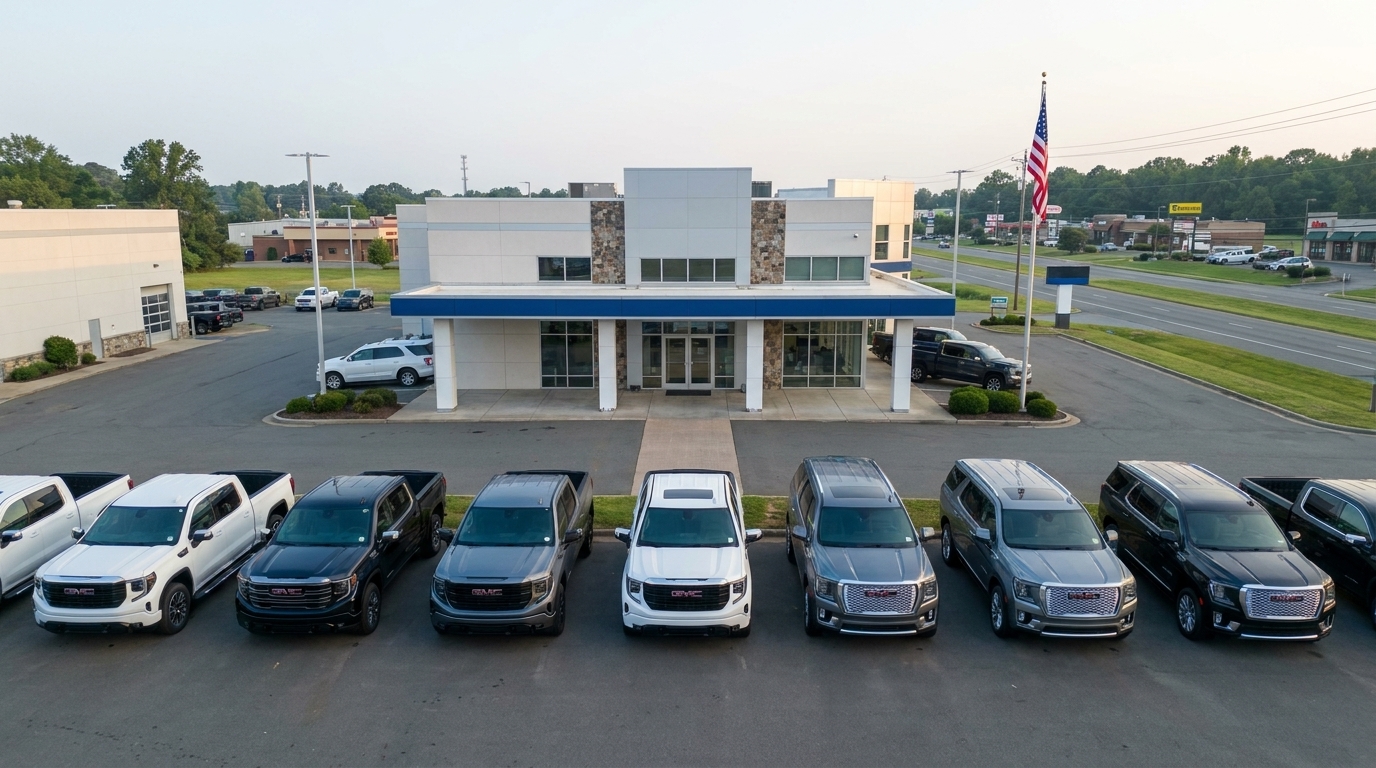
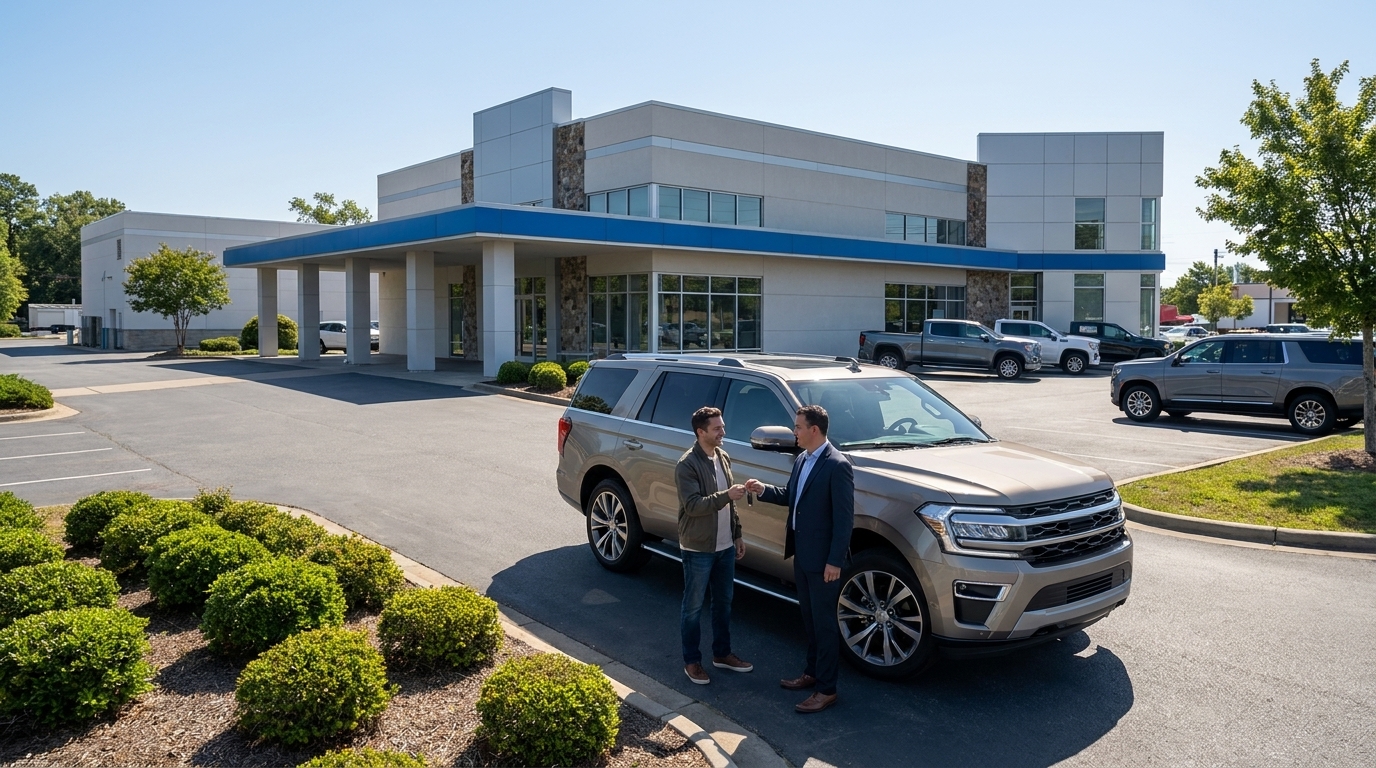
The finance team at Griffin Buick GMC works with a network of lenders that includes GM Financial, regional credit unions serving the Charlotte metro area, and national banks, which gives buyers in Monroe room to compare structures rather than accept a single take-it-or-leave-it offer.
Frequently Asked Questions
What's a good interest rate on a car loan in 2026?
It depends heavily on your credit tier, the loan term, and whether the vehicle is new or used. Buyers with strong credit on new vehicles in 2026 are seeing rates well below the rates offered to subprime buyers on older used vehicles. The right benchmark is what you personally qualify for from multiple lenders — not a published average.
Should I take the longest loan term to lower my payment?Usually no. An 84-month term lowers the monthly number but stretches interest payments across seven years and almost guarantees you'll be underwater for the first half of the loan. If a 60-month payment is uncomfortable, that's often a sign the vehicle is more than your budget supports.Is dealer financing better than a credit union or bank?
Neither is inherently better. Dealer financing is convenient and often includes manufacturer-subsidized promotional rates on new GMC and Buick models that outside lenders can't match. Credit unions sometimes win on used-vehicle rates. The honest answer is to get quotes from both and compare APRs side by side.
Can I refinance my auto loan later?
Yes. If your credit improves, rates drop, or you want to shorten your term, refinancing is straightforward. Most buyers wait at least 6 to 12 months after the original loan so payment history is established.
Bringing It Together
The buyers who walk out of a dealership with the best financing aren't necessarily the ones with the best credit — they're the ones who understood what they were signing. Knowing how APR is calculated, what your loan term really costs over time, and which add-ons are negotiable puts you in a stronger position whether you're buying a Sierra 1500 for jobsite work or an Encore GX for the daily commute around Monroe.
If you'd like to walk through financing options in person with someone who'll explain the contract line by line, the team at Griffin Buick GMC (https://www.griffinmonroe.com/) helps Monroe-area buyers structure loans every day. Their 4.6★ rating from over 1,300 Google reviews reflects the kind of financing experience worth asking for — one reviewer described the finance manager simply as "polite and easy to talk with," which is a fair bar to hold any dealership to.