.png)

Winter Driving Preparation: GMC All-Wheel Drive Systems for Ballantyne Drivers
How GMC AWD systems handle winter driving in Ballantyne, NC — what the technology does, when it matters, and how to prepare your vehicle for the season.
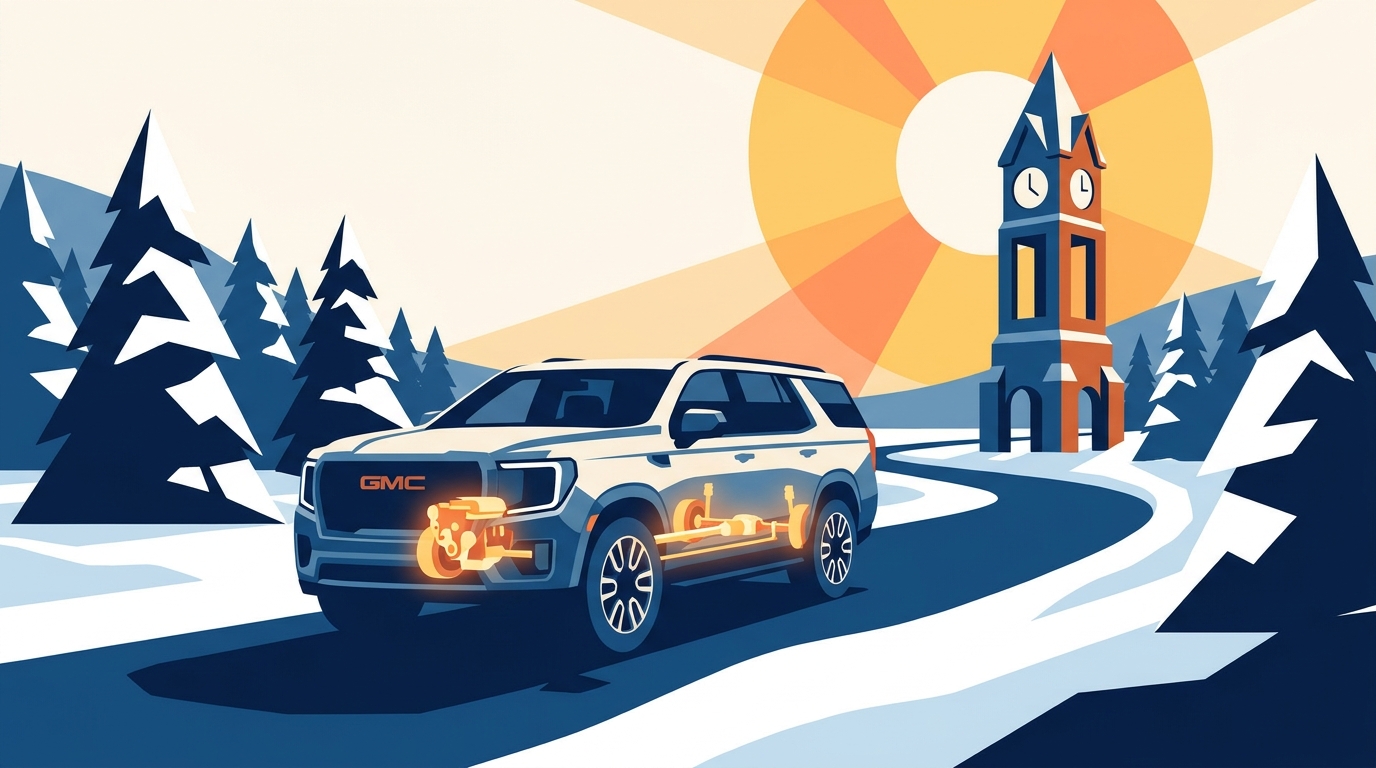
If you've driven through a Ballantyne winter, you know the challenge isn't a constant blanket of snow — it's the unpredictability. One week you're cruising down Johnston Road in 60-degree sunshine; the next, a midnight ice event has turned the I-485 ramps into a hazard map. For drivers in south Charlotte, the question isn't whether you'll encounter slick conditions this winter, but whether your vehicle is equipped to handle them when you do.
That's where GMC's all-wheel drive systems earn their keep. Understanding how they work — and what they don't do — helps you make smarter decisions before the first freeze warning hits the Carolinas.
Why AWD Matters More in the Carolinas Than You Might Think
Drivers in the Upper Midwest deal with predictable winters. Ballantyne drivers deal with something arguably trickier: freeze-thaw cycles, sudden ice storms, and the occasional surprise snowfall that shuts down schools across Charlotte-Mecklenburg in a matter of hours. The region typically sees its highest ice risk between mid-December and late February, and the bridges and overpasses near Ballantyne Commons and along Providence Road West are notorious for freezing well before surface streets do.
The other factor is preparedness — or lack of it. Because winter weather is intermittent here, many drivers don't keep dedicated winter tires, and most stay on all-season rubber year-round. That makes the drivetrain itself a bigger contributor to traction than it would be in a market where everyone swaps tires in November. An AWD vehicle on quality all-seasons handles a Ballantyne ice event materially better than a front-wheel-drive sedan on the same tires.
How GMC All-Wheel Drive Systems Actually Work
GMC offers AWD across most of its lineup — Terrain, Acadia, and the half-ton Sierra 1500 (in 4WD configuration) — and the systems aren't identical. Here's what's worth understanding before you shop.
The Terrain and Acadia: Active On-Demand AWD
The compact Terrain and midsize Acadia use an active twin-clutch AWD system that, in normal conditions, sends power primarily to the front wheels for fuel efficiency. When sensors detect slip — or when you select a specific drive mode — the system engages the rear axle and can vector torque between the rear wheels independently. This is the system you want for Ballantyne's typical winter scenario: dry pavement most of the time, sudden traction loss occasionally.
Both models include selectable drive modes. The AWD setting locks the system into full-time engagement, which is useful when you know conditions are deteriorating — say, when freezing rain is forecast overnight and you have an early commute toward uptown Charlotte.
The Sierra 1500: True 4WD with Low Range
The Sierra uses a traditional four-wheel-drive system with a two-speed transfer case. This is heavier-duty hardware designed for trailering, off-pavement work, and serious traction demands. For most Ballantyne drivers who aren't towing or working on a job site, this is more capability than a daily commute requires — but if you're hauling a boat down to Lake Wylie or heading into the mountains for a long weekend, it's the right tool.
What AWD Does — and What It Doesn't
This is where honest advice matters more than marketing. All-wheel drive helps you get moving and helps you maintain forward traction on slick surfaces. It does not help you stop faster, and it does not meaningfully improve cornering grip on ice.
The braking and lateral grip on any winter surface come almost entirely from your tires. A GMC Acadia AWD on worn all-seasons will out-accelerate a FWD crossover on ice — and then slide into the same intersection if both drivers brake too late. Understanding this distinction is the difference between confident winter driving and overconfident winter driving.
Practical Winter Driving Tips for Ballantyne
- Check tire tread depth before December. A quarter inserted upside-down into the tread should cover part of Washington's head; if you can see his whole head, the tire is at or near the wear limit.
- Keep your fuel tank above half during cold snaps. Condensation in a near-empty tank can freeze fuel lines on the rare nights Ballantyne dips into the teens.
- Avoid the urge to use cruise control on damp or potentially icy pavement, particularly on the I-485 outer loop where overpasses freeze first.
- Pre-treat with windshield washer fluid rated for sub-freezing temperatures — the bargain blue stuff sold in summer will slush up on a 25-degree morning.
- If your GMC has a remote start, use it. Warm fluids circulate better, and a defrosted windshield is a safety feature, not a luxury.
Preparing Your GMC for the Season
A pre-winter service appointment is the single highest-value thing you can do for cold-weather readiness. The items worth checking before the first hard freeze include battery condition (cold weather is when marginal batteries fail), coolant concentration, tire pressure across all four corners (PSI drops roughly one pound for every ten degrees of temperature decline), brake pad thickness, and the condition of wiper blades.
For AWD-equipped GMCs specifically, the transfer case fluid and rear differential fluid should be inspected on the manufacturer's recommended schedule. These components do more work in AWD operation, and degraded fluid is one of the few maintenance items that can quietly compromise winter performance.
Frequently Asked Questions
Do I really need AWD in Ballantyne, NC?
You don't strictly need it — plenty of drivers manage winter here in FWD vehicles. But AWD meaningfully improves your ability to get moving on icy mornings, handle steep driveways in neighborhoods like Ballantyne Country Club, and maintain traction on the unsalted side streets that often stay slick for a day or two after a freeze event. For drivers who can't afford to miss work or who travel for business, the added confidence is worth the modest fuel-economy tradeoff.
Is AWD the same as 4WD on a GMC?
No. AWD (on the Terrain and Acadia) operates automatically and is designed for on-road use across varying conditions. 4WD (on the Sierra) is driver-selectable, includes a low range for heavy-duty traction situations, and is engineered for both pavement and off-road or trailering use.
Will AWD wear out my tires faster?
Slightly, yes — because all four tires are contributing to propulsion. The more important consideration is that AWD vehicles should have all four tires replaced together, or at minimum in matched pairs with similar tread depth, to avoid stressing the differential.
When should I schedule winter service?
Mid-to-late November is ideal for Ballantyne. That gets you ahead of the first reliable cold snap and avoids the December rush when service bays fill up.
Getting Ready for Winter in Ballantyne
Winter driving in south Charlotte is a manageable problem if you respect what the weather can do and equip yourself accordingly. The right vehicle, properly maintained tires, and a realistic understanding of what AWD adds — and doesn't add — to your safety margin will get you through the season comfortably.
Ballantyne drivers who want a professional pre-winter inspection or who are considering an AWD-equipped GMC for the season can reach Griffin Buick GMC at https://www.griffinmonroe.com/ to schedule service or browse current inventory. The dealership's 4.6-star rating across more than 1,300 Google reviews reflects a service department that customers return to year after year — one recent reviewer noted the team "made sure I had another truck to use" while warranty work was being completed, which is the kind of detail that matters when winter weather complicates your week.