.png)
Complete Vehicle Title Transfer Process in North Carolina
A clear, current guide to the vehicle title transfer process in North Carolina — forms, fees, deadlines, and what Charlotte buyers should know in 2026.
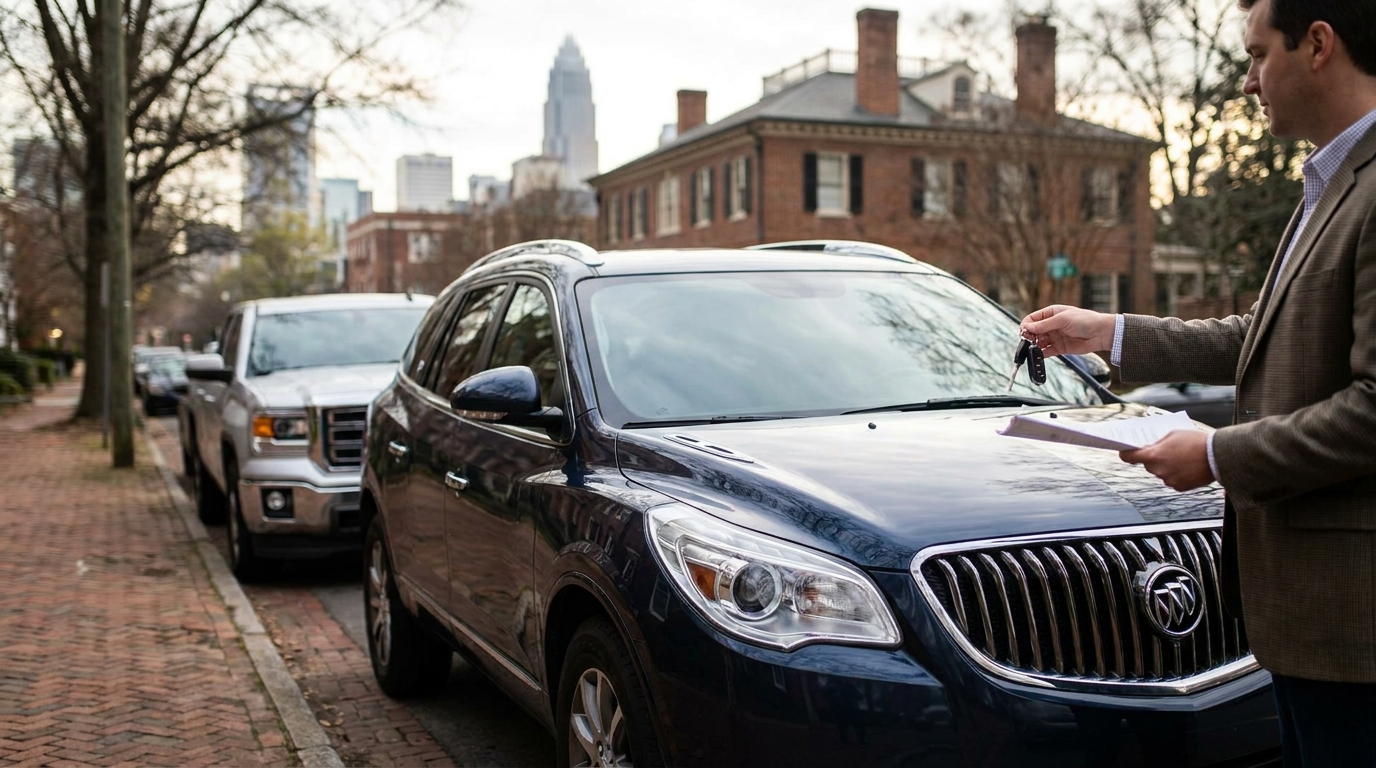
You just bought a vehicle from a private seller, inherited a car from a family member, or moved to Charlotte from out of state — and now you're staring at a stack of paperwork wondering what actually has to happen to put that title in your name. The vehicle title transfer process in North Carolina is more structured than many newcomers expect, and missing a step can cost you real money in late fees, registration delays, or invalid assignments. Here's how the process works, what it costs, and where Charlotte buyers most often get tripped up.
What a North Carolina Title Transfer Actually Requires
An NC car title transfer isn't a single document — it's a coordinated set of forms, signatures, and payments processed through an NCDMV License Plate Agency. The state's framework requires that the seller properly assign the title in the manner prescribed by statute; assignment in blank is not permitted under G.S. 20-72 and G.S. 20-73. Without a proper assignment, the transfer may not hold up against third-party claims, which is why buyers in Charlotte should never accept a title that has not been fully and correctly executed by the seller.
On the buyer's side, you'll need a completed title application. This is the core document — it captures owner name, address, SSN or FEIN, VIN, make, model, year, purchase price, date of sale, odometer reading, and any lien information. The MVR-1 is what the NCDMV uses to actually issue the new title in your name, per G.S. 20-75.
Odometer and Damage Disclosures
Two supplemental forms come up in most transactions. An odometer disclosure is required for vehicles under 10 years old. Vehicles that meet or exceed that age threshold are generally exempt. Some transactions may also require additional disclosure forms related to prior damage history for applicable late-model vehicles.
Vehicle Title Transfer Fees in NC: What You'll Actually Pay
The single biggest line item is the Highway Use Tax, or HUT. North Carolina charges 3% of the vehicle's purchase price at the time of title issuance, per G.S. 20-78. This is paid in place of a traditional sales tax on the vehicle, and it applies whether you bought from a dealership in South End, a private seller in Ballantyne, or someone you found through an online listing.
On top of HUT, a standard title fee applies. The exact amount is subject to change by legislative action or NCDMV rule — figures cited across secondary sources have varied, so verify the current fee schedule directly with NCDMV before you head to the License Plate Agency. A passenger vehicle registration fee and a plate transfer fee, if you're moving plates from a vehicle you already own, may also apply.
If you're transferring a vehicle between immediate family members or as part of a qualifying corporate reorganization, you may be exempt from HUT under applicable North Carolina law. The exemption isn't automatic — you have to claim it on the appropriate form. Skipping that step is one of the most common reasons family transfers end up paying tax they didn't owe.
The 28-Day Deadline Charlotte Buyers Should Circle
Secondary sources consistently cite a 28-day window from the date of sale to complete the title transfer at an NCDMV License Plate Agency — buyers should verify this deadline directly with NCDMV or the current statute, as it does not appear expressly in the primary statutory text available. Miss that window and a late fee may be added on top of everything else. For a Charlotte buyer who closes a private-party purchase on a Saturday and then gets busy with work, 28 days disappears faster than you'd think — especially because License Plate Agencies in Mecklenburg County tend to run heavy appointment loads. Booking your visit the same week you take delivery is the safest play.
Insurance and Inspection Prerequisites
Before the NCDMV will issue your registration, you need proof of North Carolina liability insurance from a company licensed in the state. An out-of-state policy doesn't satisfy this requirement — if you're relocating to Charlotte from another state, you'll need to switch your policy over before you can register your vehicle.
Depending on the county, an emissions and safety inspection certificate may be required before registration is issued. For the vast majority of daily-driven cars and trucks in the metro area, plan on completing any required inspection before your DMV visit. The Charlotte area's mix of older housing stock and a steadily growing commuter population means inspection stations can have wait times during peak hours — early mornings tend to move fastest.
Special Cases: Liens, Estates, and Out-of-State Titles
If the title has a recorded lien, that lien doesn't disappear just because the vehicle changes hands. NCDMV will not issue a clean title until you produce a lien release or payoff documentation from the lender. For private-party sales, this is the single most important thing to verify before you hand over money — a properly assigned title with an open lien isn't a clean title.
Estate transfers follow their own path. When a personal representative has been appointed by the court, you'll need certified Letters Testamentary or Letters of Administration, the decedent's death certificate, and the original title, per G.S. 20-75. The DMV requires proof of authority to sign for the estate as part of the title application and supporting documents. When no administration is being opened, North Carolina may allow simplified procedures for certain estate transfers where no administration is being opened — but any such method does not extinguish existing liens, so an estate vehicle with an outstanding loan still has to clear the lien first.
Out-of-state titles add a VIN verification step and, in many cases, additional documentation around prior registration and tax paid in the previous state. Buyers moving to Charlotte from places like South Carolina or Virginia often assume their existing title transfers cleanly — it usually does, but the paperwork is not identical to an in-state transaction.
Frequently Asked Questions
How long do I have to transfer a title in North Carolina?
Secondary sources consistently cite 28 days from the date of sale to complete the transfer at an NCDMV License Plate Agency. Buyers should confirm this window directly with NCDMV or the current statute before relying on it as an enforceable deadline. Filing promptly after the sale is strongly recommended to avoid any potential late fees or registration complications.
How much is the Highway Use Tax in NC?
Highway Use Tax is 3% of the vehicle's purchase price, paid at the time of title issuance per G.S. 20-78. Certain family and corporate transfers may qualify for exemption — the exemption must be claimed on the applicable form and is not applied automatically.
Do I need an odometer disclosure for an older vehicle?
Odometer disclosure is required for vehicles under 10 years old. Vehicles that meet or exceed the 10-year threshold are generally exempt from this requirement.
Can I transfer a title if there's still a loan on the vehicle?
Not cleanly. NCDMV requires a lien release or payoff documentation before issuing a clean title in your name. The lien survives a transfer until it's formally released.
What happens if a co-owner refuses to sign the title?
If a co-owner will not sign the title assignment, a court order may be required to authorize the transfer. North Carolina law does not allow one co-owner to unilaterally complete the assignment over another co-owner's objection. Resolving this situation typically requires legal proceedings, so consulting an attorney before attempting the transfer is advisable.
Do I need North Carolina insurance before I can transfer and register a vehicle?
Yes. Proof of North Carolina liability insurance from a carrier licensed in the state is required as part of the title and registration transfer process. An out-of-state policy does not satisfy this requirement. If you are relocating to Charlotte from another state, update your insurance to a North Carolina policy before visiting a License Plate Agency.
Getting It Done Right the First Time
The North Carolina DMV title transfer process rewards preparation. Have the properly assigned title, MVR-1, applicable disclosure forms, proof of NC liability insurance, lien release if applicable, and payment for HUT plus fees ready before you walk into a License Plate Agency, and most transactions move quickly. Skip a document and you're rescheduling — often after the filing clock has already started ticking.
Charlotte drivers who'd rather not navigate the paperwork alone — particularly on trade-ins, family transfers, or out-of-state titles — can work through the title and registration process with the team at Griffin Buick GMC. Customers consistently praise the dealership's professionalism, and customers consistently praise the dealership's professionalism and helpfulness throughout the trade-in and title process. The team is well-practiced at helping buyers get through this process correctly. You can reach us at https://www.griffinmonroe.com/ with questions about your specific situation, and we're happy to walk you through what your transfer will look like before you commit to a purchase. This article reflects generally applicable North Carolina rules as of 2026 and is not legal advice; always confirm current requirements directly with NCDMV before acting.